Tungsten waterfowl ammo is built for hunters who are done watching birds soak up pellets and keep flying. HEVI-XII tungsten shotshells deliver downrange energy, dense patterns, and knockdown power steel simply cannot match, giving duck and goose hunters a serious edge when birds flare or conditions turn ugly. Built with high-density tungsten shot, these waterfowl shotgun shells let hunters shoot smaller shot sizes while still carrying devastating energy, increasing pellet count and improving performance at longer distances. Whether you are upgrading from steel waterfowl loads or comparing tungsten shotgun shells for ducks and geese, HEVI-XII is made for hunters who expect dead birds when the trigger breaks.
Showing items 19 to 19 (19 total)
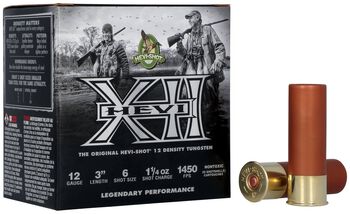
HEVI-XII, 12 Gauge, 6 Shot, 3 in, 1 1/4 oz, 1450 fps
HS53306
$87.99
-
Currently Unavailable
- Shot Size: 6
- Shotshell Length: 3in / 76mm
- Muzzle Velocity: 1450
HEVI-XII Tungsten Waterfowl Shotshells FAQs
Tungsten shotgun shells outperform steel at range because of raw pellet density. Steel sits at 7.8 g/cc. HEVI-XII runs tungsten alloy at approximately 12 g/cc, meaning each pellet carries significantly more downrange energy and velocity at 40 to 50 yards than any steel load in the same shot size. That density also allows hunters to shoot smaller shot. This increases pellet counts and produces tighter, more lethal patterns on mallards, divers, and geese at the distances where steel starts falling apart. If you are pass-shooting or hunting open water where birds work the far edge of your spread, tungsten shotshells are not a luxury. They are the right tool.
Tungsten duck loads sit above both steel and bismuth on the density scale. Steel is 7.8 g/cc, bismuth runs around 9.6 g/cc, and HEVI-XII tungsten alloy reaches approximately 12 g/cc. Higher density means more retained energy per pellet at a given distance, tighter patterns through the right choke, and cleaner kills at ranges where lighter materials run out of steam. For late-season divers, high birds, or any situation past 40 yards, tungsten waterfowl ammo is the performance tier that separates a clean kill from a cripple.
Run an extended, ported choke rated specifically for tungsten or hard shot. Do not use standard full chokes rated for lead only. Tungsten is harder than steel and can damage choke constrictions not designed for it. Most HEVI-XII shooters get the best patterns with a modified to improved-modified constriction in a quality aftermarket choke rated for tungsten. Pattern your gun and choke combination at 40 yards before the season. No two barrels print the same, and a properly patterned tungsten load is a completely different animal than an unverified one.
HEVI-XII tungsten waterfowl ammo is available in 12 and 20 gauge across a range of shot sizes built for waterfowl applications. Shot sizes run from BB through 4 to cover everything from early teal to late-season geese and everything in between. The higher density of the tungsten alloy means you can typically run one shot size smaller than you would with steel and still deliver equivalent or better energy at distance, which improves pellet count and pattern density on target.
No. TSS, or Tungsten Super Shot, refers specifically to tungsten alloy that is 18 g/cc, which is the densest commercially available shot material. HEVI-XII runs a high-performance tungsten alloy that is 12 g/cc. TSS is more commonly used in turkey loads where it allows the use of very small shot and massive pellet counts to produce extremely dense patterns. For waterfowl, HEVI-XII delivers the density advantage over steel and bismuth that most duck and goose hunters need, at a price point that makes running a full season practical.
Pressured birds flare earlier and work higher. When hunting late-season divers, and educated field geese, shots consistently push past 45 yards. At that range steel patterns open up and lack adequate energy. Tungsten shotgun shells for waterfowl hold velocity and pattern density farther downrange, which is exactly why serious hunters have moved to tungsten as their standard load rather than a specialty option. The cost per shell is higher. The cost of wounding birds is higher still.