Best Shot Size for Duck Hunting


Most duck hunters fill straps with shot sizes from No. 6 through No. 1, but choosing the best duck hunting ammo within that range takes real consideration. Shot size, choke selection, shotgun gauge, and pellet material work together as a system. Smaller pellets do better over decoys and larger pellets perform at extended ranges. Choke and shot size should always be matched, not selected independently. One pellet material behaves completely differently than another. Understanding those tradeoffs and differences is often what separates making clean kills and watching birds fly away.
Consider two common scenarios. The first is flooded timber where wood ducks and mallards are finishing feet-down inside 25 yards. The second is a late-season field hunt where educated birds flare at 45 yards and force shots at the edge of effective range. Most hunters wouldn't reach for the same load in both situations, and they shouldn't.
Whether you're shooting 12-gauge duck loads, 16-gauge duck loads, 28-gauge duck loads, or even .410 duck loads, the goal remains the same: deliver enough pellets with enough energy to produce clean kills. Understanding how shot size, choke, and pellet material work together will help you choose the best duck hunting shells for the conditions you're facing.
What Shot Size Works for Ducks
It’s critical to evaluate both pellet material and shot size rather than shot size alone. The reality is energy retention and pattern density matter just as much. Plus, pellet count and energy constantly compete against each other. Smaller pellets give you more pattern density. Bigger pellets hit harder. Exact pellet count comparisons vary by payload and manufacturer, so this is one area where product-specific pellet-count data can strengthen gear decisions. Rather than relying on assumptions, hunters should pattern their chosen duck shells on paper before opening day.
For most situations, No. 4 remains one of the safest starting points when choosing the best duck ammo because it balances pellet count and energy across a wide variety of conditions. Beyond that, check out this guide:
| Shot Size | Best For | Typical Range |
|---|---|---|
| #6 | Timber hunts, teal, wood ducks, close decoying birds | Inside 25 yards |
| #5 | Close decoying puddle ducks | 20-30 yards |
| #4 | General-purpose duck hunting | 25-35 yards |
| #3 | Mixed conditions and larger ducks | 30-40 yards |
| #2 | Late-season mallards, divers | 35-45 yards |
| #1 | Long pass shooting, tough birds | 40+ yards |
Decoying Ducks vs. Pass Shooting Changes the Math
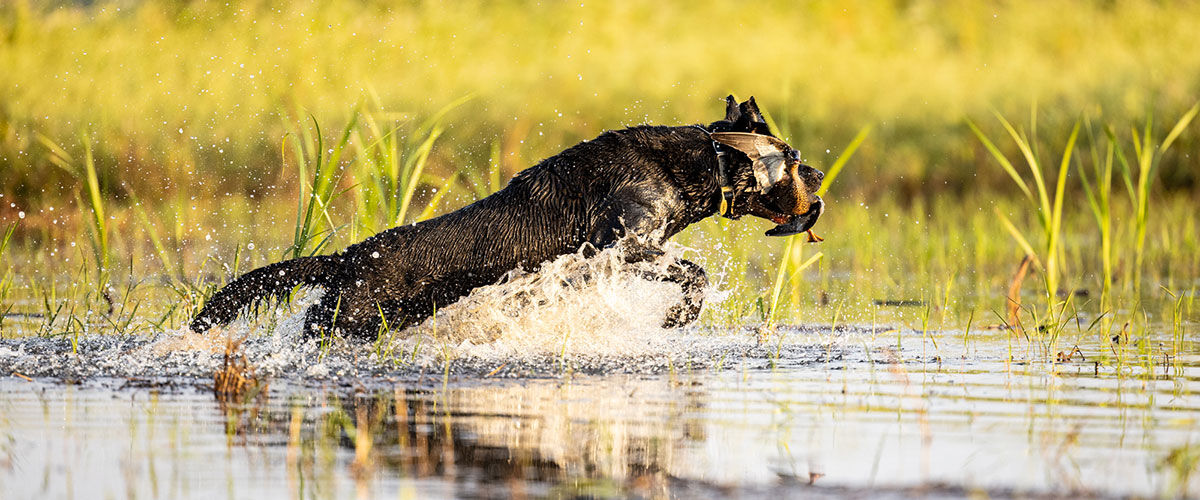
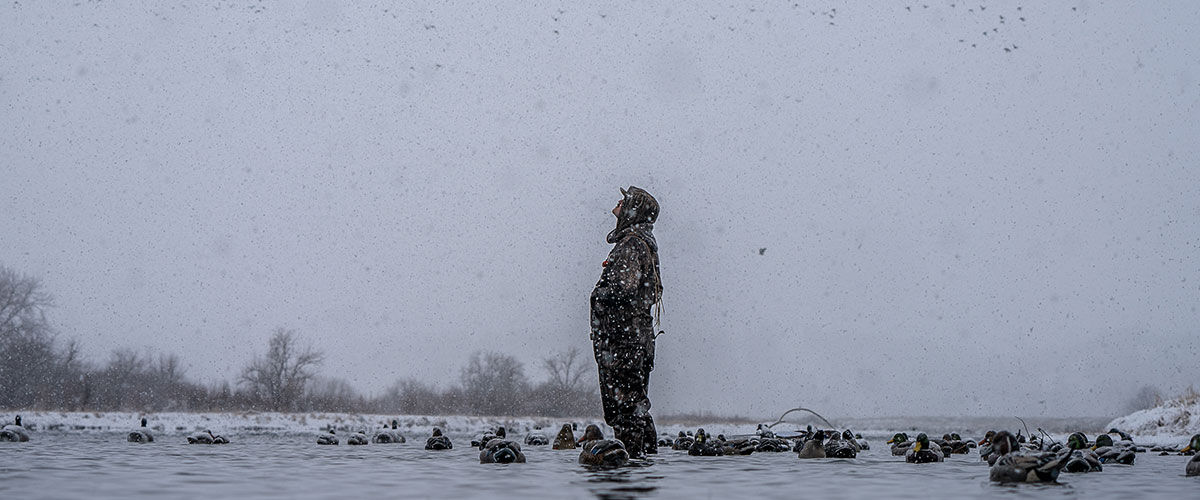
The difference between decoying ducks and pass shooting changes everything. Imagine a flooded slough where mallards and wood ducks are dropping directly into the hole. Birds are committed, wings cupped, and shots happen fast at close distances. That's a completely different hunt than watching late-season birds circle a field spread before sliding downwind and flaring outside comfortable range.
Inside 25 yards, hunters can often move toward No. 5 or No. 6 shot, especially when using high-quality bismuth duck loads or tungsten duck loads. At those distances, pattern density matters more than maximum individual pellet energy.
Between 25 and 35 yards, No. 4 and No. 3 loads become the primary workhorses. This is where most ducks are harvested every season. For many hunters, a quality 12-gauge duck shell loaded with No. 4 shot represents the ideal balance.
At 40 yards and beyond, the equation changes. Now you're asking pellets to retain energy long enough to penetrate feathers, down, and vital organs. That's where No. 2 or No. 1 shot often shines, particularly for divers and larger ducks.
Species behavior matters too. Mallards and wood ducks frequently commit tightly to timber holes and small-water spreads. Divers, pressured late-season birds, and field-hunt mallards often force longer shots.
Wind deserves a mention as well. A strong crosswind or tailwind can push birds farther from the decoys than planned and often explains why experienced hunters size up shot for certain weather conditions.
Does Choke Selection Make a Difference?
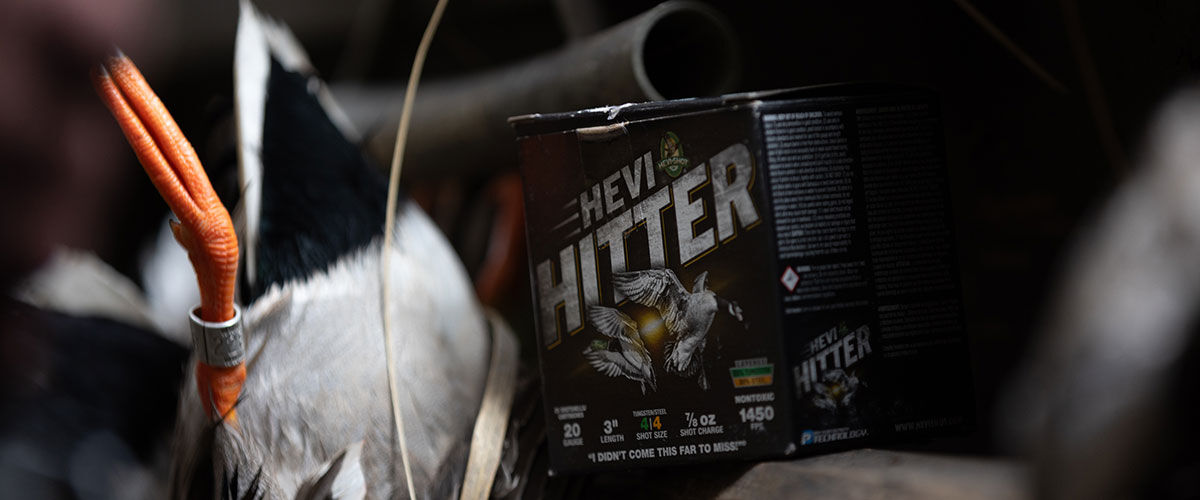
Yes. And it's one of the most overlooked parts of choosing the best duck hunting loads. Choke and shot size do the same job, so picking one without the other is half a decision. Think of choke selection as pattern management. Your goal is not simply making the pattern tighter. Your goal is creating a pattern with enough pellet density to consistently hit a duck's vital zone.
Generally speaking, improved cylinder and modified chokes pair exceptionally well with smaller, denser shot sizes like No. 5 and No. 6. Those combinations often produce forgiving patterns at typical decoying distances.
As pellet size increases toward No. 2, No. 1, BB, or T shot, hunters frequently shift toward modified or full chokes, depending on range and ammunition design.
Here's where hunters get into trouble: a tighter choke doesn't always produce a tighter pattern. Large pellets pushed through overly restrictive chokes can actually create pattern holes and uneven pellet distribution. The hunter expects a tighter pattern and gets the opposite.
This is one reason ammunition and wad design matter. Modern wads can help maintain pattern integrity while using larger shot or tighter choke combinations.
Pattern consistency is also where technologies like HEVI's Pattern Density Technology enter the conversation. Consistent pellet distribution matters just as much as velocity or pellet energy, particularly when birds are crossing or quartering away.
No matter what you're shooting, paper targets tell the truth. Pattern every combination before season starts.
Why Shot Material Lets You Rethink Shot Size
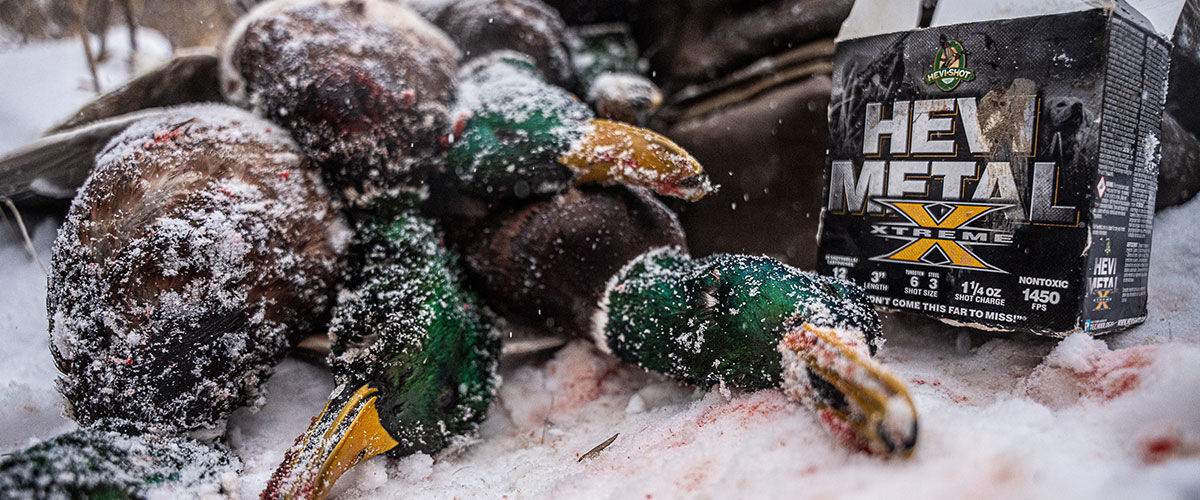
A decade ago, many hunters automatically reached for steel No. 2s and never thought twice about it. Today, more hunters are intentionally stepping down pellet size because they're shooting denser materials. That's one of the biggest advantages of modern bismuth duck loads and tungsten duck loads.
High-density materials carry more energy downrange and allow hunters to use smaller shot sizes without sacrificing penetration. Higher-density shot lets hunters shoot smaller pellets while maintaining performance.
Density tells the story:
Steel: 7.8 g/cc
Bismuth: 9.6 g/cc
HEVI-XII Tungsten: 12 g/cc
Because bismuth is significantly denser than steel, hunters can often drop one shot size and maintain comparable lethality. For example, a hunter who previously ran steel No. 2s may switch to bismuth No. 4s and gain additional pellets in the pattern while maintaining effective downrange energy. That's one reason bismuth duck loads continue gaining popularity.
Where each HEVI option fits:
HEVI-Steel: Affordable everyday option and classic steel shot for duck hunting.
HEVI-Bismuth: Allows smaller shot sizes and increased pattern density.
HEVI-XII: Top tungsten load offering exceptional retained energy and long-range performance.
HEVI-Hammer: Layered steel and bismuth design provides a balance of affordability and performance.
For hunters seeking a deeper dive into material differences, HEVI's Steel vs. Bismuth vs. Tungsten is worth reviewing before selecting the best duck load for your season.
Gauge Changes the Equation Too
The 12 gauge remains the benchmark against which all other waterfowl setups are measured. Most 12-gauge duck loads and 12-gauge shells for duck hunting operate comfortably within the No. 4 through No. 2 range. It's the most versatile platform for ducks and the starting point for discussions about the best 12-gauge ammo for duck hunting.
Twenty-gauge hunters often compensate for smaller payloads by emphasizing efficient patterns and denser materials. Many successful 20-gauge waterfowl hunters rely heavily on No. 2 and No. 4 loads.
The resurgence of 16-gauge duck loads deserves attention, too. Modern bismuth and tungsten offerings have helped close the gap between 16- and 12-gauge performance, making the 16 a legitimate waterfowl choice rather than simply a nostalgic upland gun.
Sub-gauge hunters continue pushing boundaries. Top-shelf 28-gauge duck loads increasingly use high-density materials to maintain effectiveness despite smaller payloads. Likewise, properly selected.410 duck loads have become much more viable when paired with tungsten-based ammunition.
At the opposite end of the spectrum, dedicated pass shooters and goose hunters frequently employ 10-gauge setups loaded with T shot or BBB when extreme range and energy become priorities. The common thread is simple: as gauge decreases, pellet material often becomes more important.
Common Shot Size Mistakes Duck Hunters Make
The first mistake is sizing shot for the gun instead of the bird. Too many hunters decide what to shoot based purely on gauge rather than considering species, range and conditions. The second mistake is undersizing pellets for late-season ducks. Heavy down feathers, colder weather, and tougher birds demand more retained energy. When hunters ignore that reality, cripple rates increase.
The third mistake is assuming steel and denser materials behave identically at equal shot sizes. They don't. A No. 4 bismuth pellet is not the same as a No. 4 steel pellet in terms of retained energy and downrange performance.
Finally, remember that ammunition regulations vary by location. Always confirm current rules and approved shot materials with your state wildlife agency before the season opens.
FAQs
Is 4 shot or 6 shot better for ducks?
It depends on distance. No. 6 excels over close decoys, especially for teal, wood ducks and early-season puddle ducks inside about 25 yards. No. 4 offers more versatility because it carries energy farther while still delivering strong pattern density. If you're looking for a single do-everything option, No. 4 is often considered one of the safest choices for duck hunting.
Does choke size matter as much as shot size?
Absolutely. Choke and shot size work together to create the final pattern. A perfect shot size paired with the wrong choke can produce poor pattern density, gaps, or ineffective pellet distribution. Many experienced hunters spend as much time testing choke combinations as they do selecting ammo because both variables directly affect success and clean kills.
Why do some hunters go up to BB or BBB for geese?
Geese are larger birds with heavier feathers, larger bones, and a greater need for retained pellet energy at distance. BB and BBB pellets sacrifice pellet count in exchange for significant energy retention. That's especially helpful for pass-shooting geese and handling birds beyond traditional duck ranges. Many dedicated goose hunters consider larger shot essential when conditions demand long-range performance.
Can I use the same choke across different shot sizes and materials?
You can, but it usually isn't optimal. Different pellet materials and shot sizes often pattern differently through the same choke. What works beautifully with steel No. 4 might perform poorly with tungsten No. 6 or bismuth No. 5. The only reliable way to know is by shooting patterns on paper and evaluating what your shotgun actually produces.
Are there restrictions on shot size or material for duck hunting?
There can be. Waterfowl hunters must use approved nontoxic shot, but specific rules can vary by jurisdiction, wildlife area, and hunting zone. Regulations change periodically, so it's important to review current state and federal waterfowl regulations before hunting.